2026-11-04 ·
How Sun-Damaged Skin Changes Tattoo Removal Plans
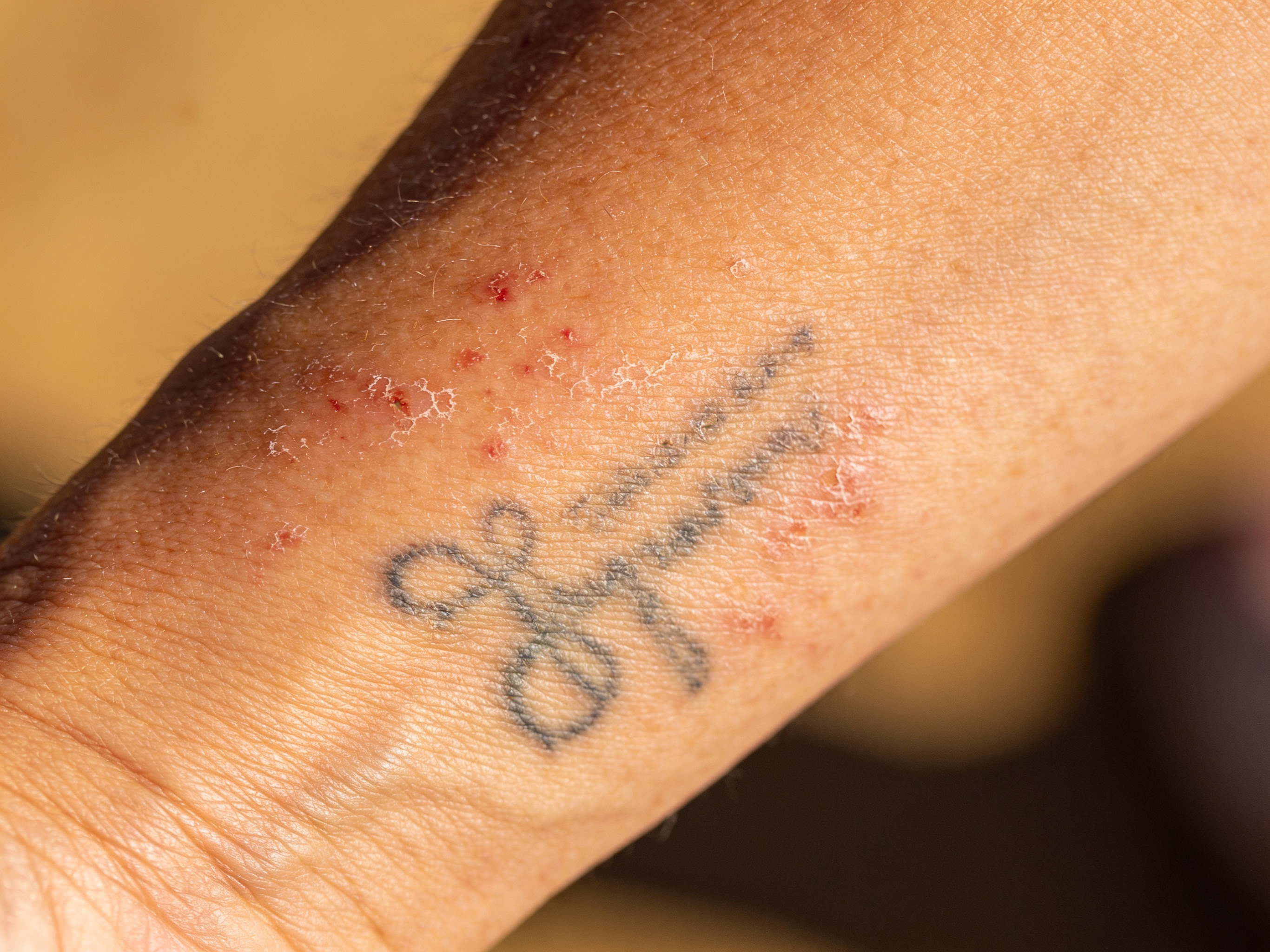
If your skin has taken real sun damage, expect your tattoo removal plan to stretch by roughly 2–6 extra sessions and to include mandatory 4–6 week healing windows you might otherwise skip. In Gilbert, that's not an edge case — it's the default. We live in a hot desert climate where UV exposure is significant even in January, and skin that's spent years around Gilbert Regional Park, the Riparian Preserve trails, or poolside in Power Ranch behaves differently under a laser than skin from a milder climate. Sun-damaged skin is thinner, more reactive, and slower to clear ink, so the plan has to change before the first pulse ever fires.
Why Sun Damage Slows Removal in the Desert
Laser tattoo removal works because your immune system — not the laser — carries fragmented ink away. The laser breaks pigment into particles; your lymphatic system does the actual removal over the following weeks. Sun-damaged skin compromises both halves of that equation. Chronic UV exposure thickens the outer layer of the skin, which scatters laser energy and means less of it reaches the ink. It also suppresses the local immune response, so clearance between sessions is slower.
There's a second problem that matters more in Maricopa County than almost anywhere else: tanned skin competes with ink for laser energy. Laser wavelengths target pigment, and melanin is pigment. A tan — even a faint one from a Saturday at Mesa's Riverview or a morning walk through Agritopia — absorbs energy meant for the tattoo. That raises the risk of blistering, hypopigmentation (light spots), and hyperpigmentation (dark spots), especially on the forearms, shoulders, and hands where Gilbert residents get the most exposure.
Practically, this means a black forearm tattoo on well-protected skin might clear in 6–8 sessions, while the same tattoo on sun-exposed, tanned skin often takes 10–14. That's not a scare tactic — it's what the physics and the skin biology demand.
What We Look For Before Starting Treatment
Every plan here starts with an honest skin assessment, not just a look at the tattoo. Sun damage shows up in predictable ways, and each one changes the approach:
- Active tan or recent burn: treatment is postponed. Lasering tanned skin is how permanent light or dark patches happen. We wait until the tan fades, usually 4–8 weeks.
- Dry, flaky, or leathery texture: common on long-term Gilbert residents who've worked outdoors or driven with windows down for years. Dehydrated skin heals slower, so we push session spacing out and recommend a hydration routine before we begin.
- Fading or blurring of the tattoo itself: years of UV break down ink particles naturally. This can actually help — a sun-faded tattoo often needs fewer sessions — but it also means the ink sits shallower, which changes the energy settings we use.
- History of blistering or peeling after sun: a sign the skin is reactive, which calls for more conservative settings and longer gaps between treatments.
If you've got a cover-up in mind instead of full removal, sun-faded ink can be an advantage — our tattoo fading for cover-ups process often needs fewer sessions on already-weathered skin.