Why Partial Fading Beats Full Removal for Cover-Ups
Most people who walk in from Downtown Gilbert or Power Ranch don't actually want the tattoo gone — they want it gone enough. Full removal to bare skin can take a dozen or more sessions; fading for a cover-up usually takes a fraction of that. The goal is to knock down the darkest pigment, break up dense black linework, and flatten the contrast so a skilled artist can layer new ink over the old. Every session you skip is money back in your pocket and months off your timeline, which matters when your artist in Mesa or Chandler is already booked out.
How Gilbert's Climate Changes the Job
Our desert sun is the single biggest variable in this work. In Maricopa County's very hot summers, a fresh laser session on a forearm or shoulder means strict sun avoidance for weeks — a tan or sunburned treatment area can't be safely or effectively treated, and hyperpigmentation risk climbs. We plan sessions around your calendar: many clients from Agritopia and San Tan Ranch front-load treatments in fall and winter when the mild weather makes covering up with clothing effortless, then let the skin settle through summer. Hydrated, healthy skin also clears fragmented ink faster, so aftercare matters more here than in a humid climate.
What Makes Ink Fade Unevenly
Not all pigment responds the same. Old amateur work from a friend's kitchen table — common on clients who've lived around Gilbert for decades — often fades faster than dense professional black, because the ink sits shallower and is already broken up. Iron-oxide browns and flesh-tone pigments used in old "corrective" work can paradoxically darken when hit with laser, so we test-spot those before committing to a plan. Multi-colored pieces with heavy saturation in one zone may need targeted passes rather than uniform treatment, and we map that out at your consult near Heritage Court.
Timing Your Cover-Up Appointment
The mistake we see most is clients booking the cover-up too soon. After your final fading session, the skin needs time to fully settle and the body needs time to keep clearing fragmented pigment — fading continues for weeks after each session. Rushing to the artist with inflamed or recently treated skin leads to uneven ink retention and a muddier result. We coordinate timing with your cover-up artist, whether they're in Gilbert proper or over in Queen Creek, so you walk in with skin that's calm, even, and ready to hold new pigment.
What to Know Before You Start
Bring photos of the cover-up design you have in mind if you can — knowing whether your artist needs a fully blank slate or just softened linework changes how aggressively we treat. If you're on acne medication or have a history of keloid scarring, tell us at the consult; those change the treatment parameters. And don't wax, pluck, or get a spray tan in the treatment area beforehand. Sessions are quick — most fading passes take minutes, not hours — and you'll be back to the Riparian Preserve walk or the farmers market the same day with nothing more than mild redness.
Technician insight
In Gilbert, the thing that catches most people out with cover-up fading is our sun. Clients come in with a tan from weekends at Gilbert Regional Park or the pool, and tanned skin can't be safely treated — it raises the risk of pigment changes and makes the laser far less effective. The clients who finish fastest are the ones who start in October and keep the treated area covered through our mild winter, banking sessions before summer forces a pause.
Dense Forearm Name Faded for a Heritage District Cover-Up
A client came in with a large black script name on their forearm and a cover-up design already sketched by their artist, but the heavy linework was too dark to bury. We mapped the densest strokes and treated only those zones rather than the whole piece, spacing sessions through the fall and winter when clothing could cover the area comfortably. After a shortened course of sessions the lettering had faded to a soft shadow, and their artist layered the new design over it without the old text ghosting through.
Tattoo Fading for Cover-Ups Services We Offer
✓Black Ink Lightening for Cover-Ups
Focused sessions that break up dense black linework and shading — the hardest pigment for an artist to cover — so the new design reads clean instead of muddy.
✓Selective Zone Fading
Treating only the darkest or most problematic areas of a tattoo rather than the whole piece, cutting your session count and cost while giving the artist exactly the canvas they need.
✓Multi-Color Pigment Reduction
Targeted passes on stubborn colors like blues, greens, and reds that resist cover-up ink, with test-spotting for pigments known to react unpredictably.
✓Name and Script Softening
Lightening lettering and script tattoos just enough to blur the text so a cover-up can incorporate or obscure it without the old words shadowing through.
✓Amateur Tattoo Fading
Home-stick-and-poke and amateur work usually sits shallower and fades quickly, often needing far fewer sessions before a cover-up is viable.
✓Touch-Up Fading Between Sessions
Spot treatments for areas that held pigment unevenly after your main course of sessions, evening out the canvas before your artist appointment.
✓Cover-Up Planning Consultations
A no-pressure assessment of your existing tattoo, your cover-up design, and a realistic session-and-timeline estimate you can share with your artist.
Tattoo Fading for Cover-Ups Cost in Arizona
| Service | Typical Range | What Affects It |
|---|---|---|
| Small fading session (up to ~2x2 inches, e.g. a wrist or ankle script) | $75–$150 | Moves with ink density — dense professional black sits at the top of the range |
| Medium fading session (~3x3 to 5x5 inches) | $150–$300 | Size and number of colors treated are the biggest drivers |
| Large fading session (half-sleeve or larger zones) | $300–$500+ | Priced by zone; selective fading of only the darkest areas can bring this down |
| Consultation and cover-up feasibility assessment | Free | Includes a session estimate you can share with your tattoo artist |
| Test spot treatment | Free–$50 | Often waived or credited toward your first full session |
Ranges are typical for Arizona and confirmed with an exact written quote before any work starts.
How it works
- 1
Free Consultation and Ink Assessment
We look at your existing tattoo under good light, discuss the cover-up design you have planned, and identify which zones and colors actually need treatment. You'll get an honest session estimate — sometimes the answer is fewer sessions than you feared.
- 2
Test Spotting When Needed
For darker skin tones, older tattoos, or pigments known to react unpredictably, we treat a small test area first and check how your skin responds before committing to full passes.
- 3
Targeted Fading Sessions
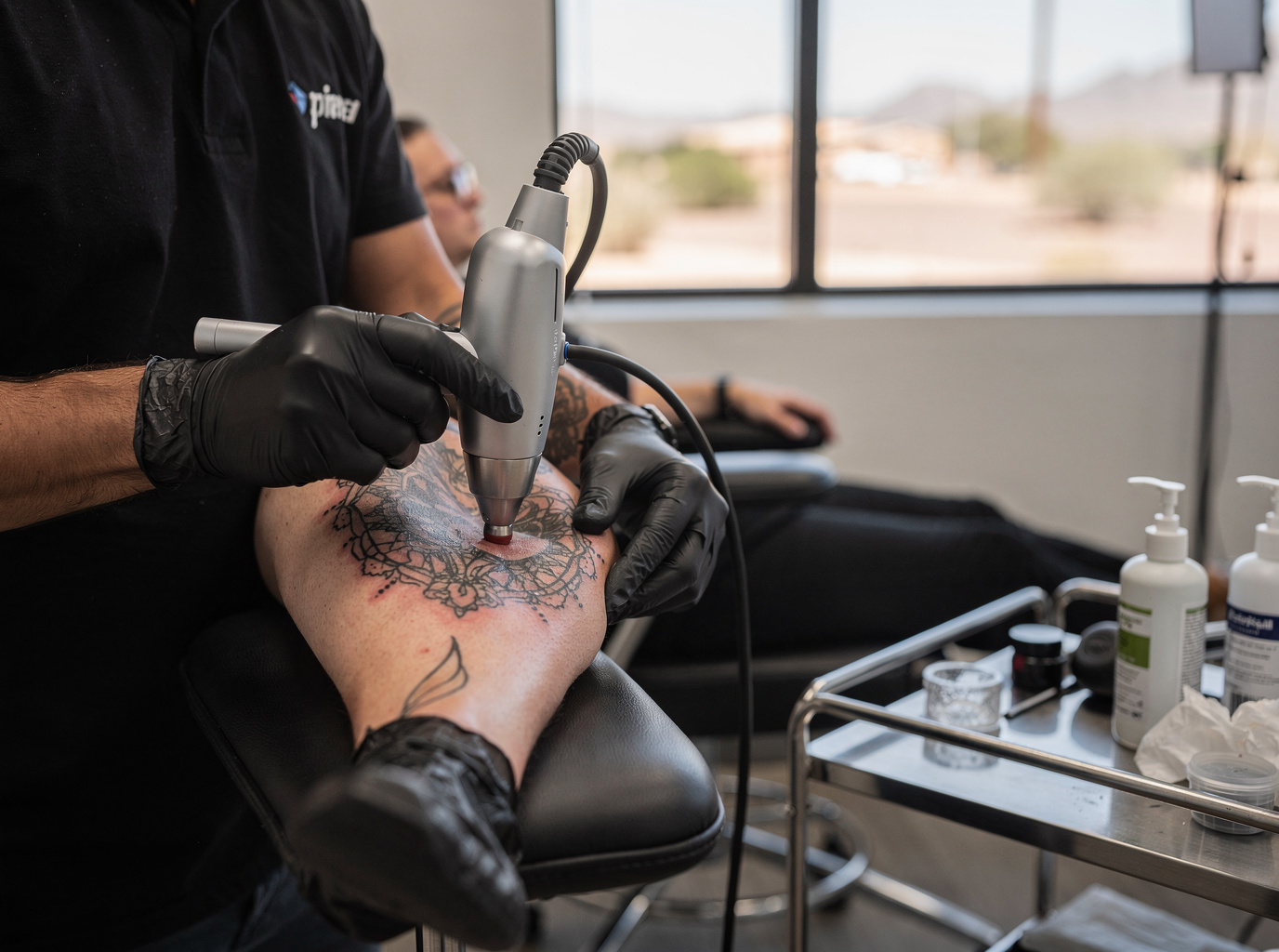
Each session uses laser passes focused on the zones your cover-up artist needs softened. Treatments are quick, with cooling for comfort, and most clients are in and out well within an hour.
- 4
Healing and Sun Management
You'll leave with clear aftercare instructions. In Gilbert's climate, sun protection on the treated area is non-negotiable — tanned or burned skin can't be treated and heals worse. We space sessions to let your body keep clearing pigment between visits.
- 5
Clearance Check and Artist Handoff
Once the ink has faded to the level your design needs, we confirm the skin is fully settled and give you the green light to book your cover-up — with timing guidance so the new ink takes evenly.
Pricing
Cover-up fading is priced per session and per treatment zone, so costs depend on the size of the area, the density of the ink, and how many sessions your design actually requires. Fading for a cover-up typically costs meaningfully less than full removal because we stop once the canvas is workable. You'll get an upfront per-session quote at your free consult before anything is booked — no packages pushed, no surprises.