Why Color Ink Is a Different Job
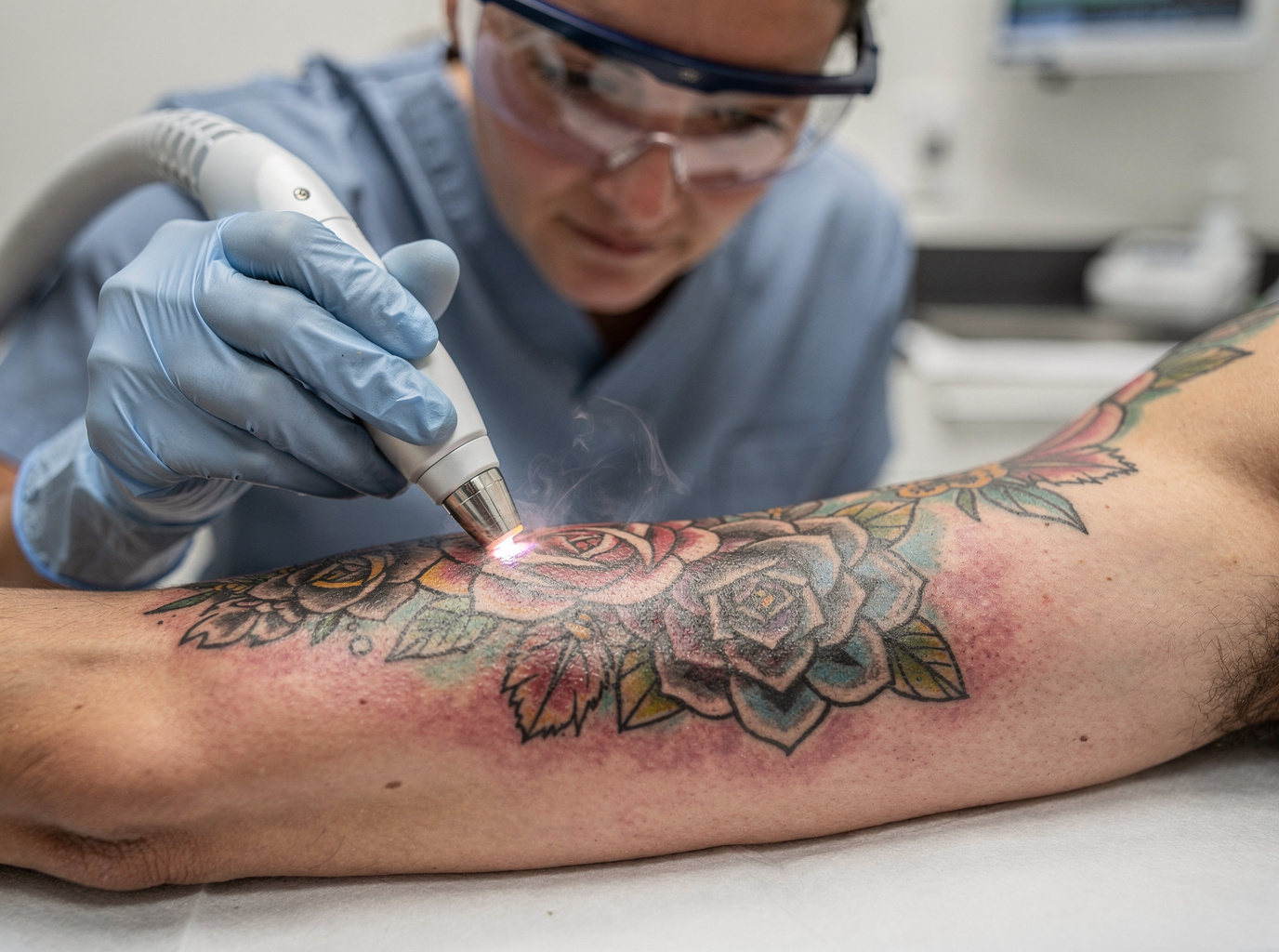
Black and grey pigment responds to laser energy predictably, but color tattoo removal is a genuinely different discipline. Blue and green pigments absorb light in a different wavelength band than black, reds and oranges need another, and yellows, whites and skin-tone pigments often barely absorb laser light at all — they can also oxidize and turn darker before they ever fade. That's why a studio that only runs a single-wavelength machine struggles with color work. Treating a full-color piece properly means matching each pigment family to the right wavelength and spacing sessions far enough apart for the body to clear the fragmented ink through the lymphatic system.
How Gilbert's Climate Changes Treatment
Living in Maricopa County's hot desert climate creates real constraints on laser tattoo removal. After every session the treated skin is essentially a burn injury, and it must be strictly kept out of the sun while it heals — not easy when it's 110°F in July and everyone spends weekends at Gilbert Regional Park or the Riparian Preserve. Tanned or sun-exposed skin absorbs laser energy meant for the pigment, which raises blistering and hypopigmentation risk and forces us to lower treatment settings. Practically, that means clients who start a color removal series in fall or winter — when our mild winters make covering up and avoiding sun easy — typically finish in fewer sessions with better skin quality than those starting in June.
What Actually Determines How Many Sessions You Need
For color work, the biggest variables are pigment density and depth, not the size of the tattoo. A saturated traditional-style piece with heavy blue and green shading from a shop in Mesa or Chandler may take substantially more sessions than a fine-line color tattoo of the same size, because more pigment means more laser passes and more for the immune system to clear. Ink that has been covered up (a cover-up over an old tattoo) carries double the pigment load. Age helps — a ten-year-old tattoo from someone's time near Downtown Gilbert has usually faded and partially cleared on its own — but color still lags black. We assess each layer honestly at your first visit rather than promising a session count we can't back up.
Red Flags and Honest Expectations
Be wary of any Gilbert studio quoting a fixed number of sessions for a color tattoo sight unseen, or promising removal in three treatments. Yellow, white and flesh-tone pigments are the hardest to move and sometimes never fully clear; white can turn grey-brown when it oxidizes under laser light, and we test-treat those areas first. Cosmetic tattoos on the eyebrows and lips deserve special caution because some contain iron-oxide pigments that darken unpredictably. Also know that Arizona has no state licensing scheme specific to laser tattoo removal — the operator's training and equipment matter far more than a wall certificate, so ask what wavelengths their machine actually delivers and how they handle sun-exposed skin between sessions.
Technician insight
In Gilbert, the thing that catches most people out with color tattoo removal is our sun — not the laser. Someone gets treated in April, then spends a weekend at the Riparian Preserve or a Diamondbacks game without real sun protection, and their tanned skin forces us to drop the energy settings and stretch the whole plan out. The clients who finish fastest start in fall or winter and treat sun avoidance as part of the treatment itself.
Faded Green Phoenix Piece on a Power Ranch Client
A client from Power Ranch came in wanting a green-and-blue shoulder piece gone before a wedding. The tattoo was over a decade old, which helped, but the saturated green shading was the slowest element and the white highlight ink darkened slightly on first contact. We test-spotted the white, switched wavelengths for the green, and built an eight-week session schedule starting in October so healing fell through Gilbert's mild months instead of summer. The black linework cleared fastest, the colors faded over successive sessions, and the client had a dramatically lighter piece by spring — with a realistic path to full clearance rather than a promised finish date we couldn't keep.
Color Tattoo Removal Services We Offer
✓Multi-Wavelength Color Treatment
Full-spectrum laser work that switches wavelengths to target blue, green, red and orange pigments individually — the only reliable way to break up color ink that a single-wavelength machine leaves behind.
✓Blue & Green Ink Removal
Blues and greens sit in a tough absorption band and usually need the most sessions of any color family. We treat them with the correct wavelength and realistic spacing so the skin stays healthy throughout.
✓Red & Orange Ink Removal
Red-family pigments respond well to the right wavelength but carry a higher risk of transient skin lightening in sun-exposed Arizona skin. We use conservative settings and strict aftercare to protect your tone.
✓White & Flesh-Tone Pigment Correction
Whites and skin-tone inks often oxidize darker before fading. We spot-test these areas first and set expectations honestly about what can and can't be fully cleared.
✓Cover-Up Fading & Lightening
Partial removal to fade an existing color tattoo so a new cover-up can be done cleanly. Fewer sessions than full removal, timed around your tattoo artist's schedule.
✓Full Color Sleeve & Large-Piece Removal
Large color pieces are treated section by section across multiple appointments, keeping total energy per visit safe and healing manageable in Gilbert's heat.
✓Sun-Damaged Skin Treatment Planning
For clients who work outdoors or spend summers at Gilbert Regional Park, we build a schedule and aftercare plan around sun exposure so tanned skin never gets over-treated.
Color Tattoo Removal Cost in Arizona
| Service | Typical Range | What Affects It |
|---|---|---|
| Small color tattoo (under ~3 inches) — per session | $100–$250 | Moves with pigment density; blue and green ink adds sessions |
| Medium color piece (~3–6 inches) — per session | $250–$400 | Size and number of distinct colors both raise the per-visit price |
| Large color piece or partial sleeve — per session | $400–$600+ | Often treated in sections across visits to keep energy levels safe |
| Test spot treatment | Free–$50 | Frequently credited toward your first full session if you proceed |
| Cover-up fading (partial removal) | $100–$300 per session | Fewer sessions than full removal; timed around your tattoo artist |
Ranges are typical for Arizona and confirmed with an exact written quote before any work starts.
How it works
- 1
Free Consultation & Ink Assessment
We photograph and map your tattoo, identify the pigment families present, and discuss your sun exposure, health history and goals. You get an honest read on what color removal can achieve for your specific piece — including which colors may never fully clear.
- 2
Test Spot Treatment
For tattoos with white, yellow or flesh-tone pigment, we treat a small test area first and wait to see how the ink responds. This catches oxidation darkening before it happens across the whole tattoo.
- 3
Scheduled Laser Sessions
Treatments run on spaced intervals — typically 8 or more weeks apart for color — because your body clears fragmented pigment between visits, not during them. Each session we adjust wavelength and energy based on how the last one healed.
- 4
Aftercare Through Arizona Summers
You leave every session with written care instructions: keep it covered, no pools at Heritage Court or lake days, and strict sun protection until the skin fully settles. We check healing at each visit and adjust the plan if the skin needs more time.
Pricing
Color tattoo removal is priced by treatment area size and session, not by the whole job up front — nobody can honestly quote a total for color work before seeing how your ink responds. Small color pieces typically run in the low-to-mid hundreds per session, with larger pieces costing more per visit. Blues and greens usually need more sessions than reds; whites and yellows are the wildcard. We give you a per-session quote at your free consultation and tell you plainly if a color may not fully clear.